NASA just released another ‘selfie’ image taken by the onboard AI on the Curiosity rover currently exploring the red planet. As usual though a plethora of social media cretins logged on to denounce the photograph and raise suspicions of its authenticity.
However one response so far has pretty much manage to silence the critics and I like it.
If the scientists at NASA are clever enough to send a robot to Mars, I’m pretty sure they can get it to take a selfie without the arm in the image.
Exactly.
If you’re still not absolutely convinced, or would like a brief explanation of how it’s taken you should watch this short animation.
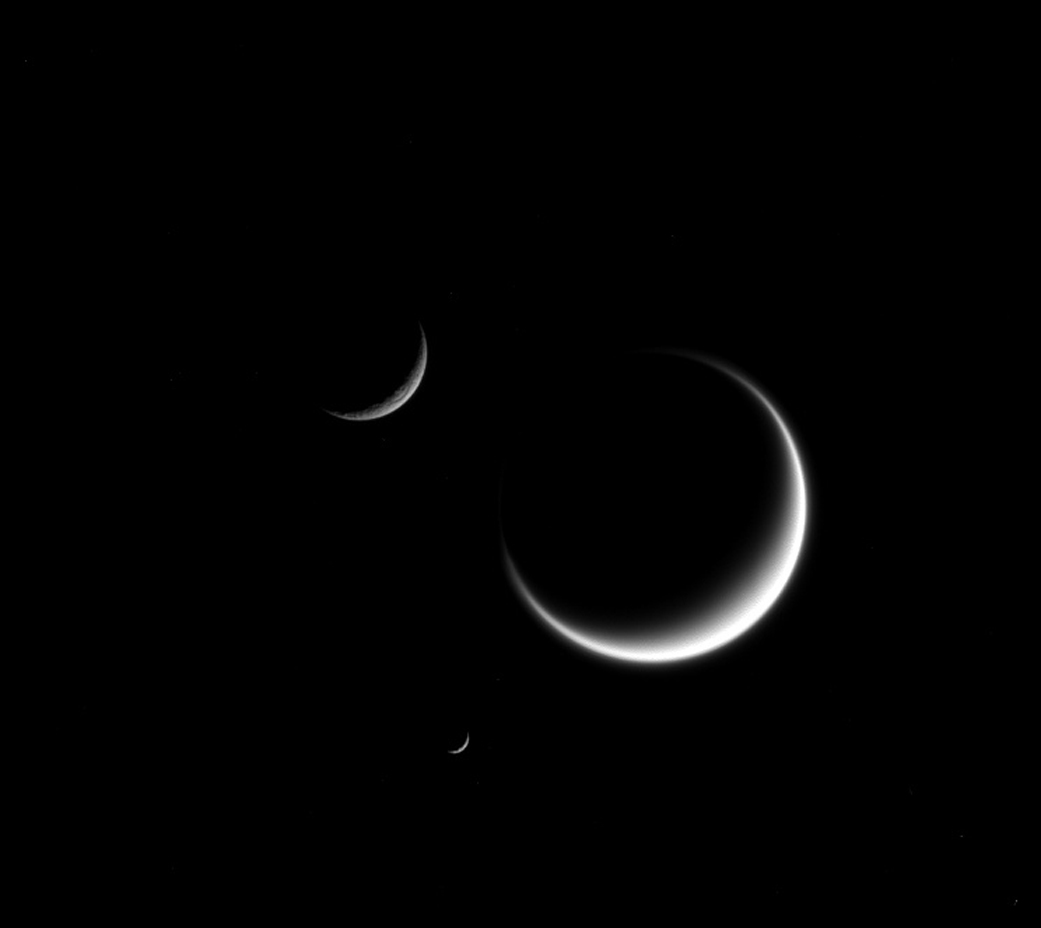
Have you ever heard how the location of a photograph can automatically give you the WOW factor? Well in Cassini’s case, the far flung spacecraft that’s been exploring Saturn for the best part of a decade has just that. It is absolutely relentless at sending back images home across 80 minutes of Space. Take a look at this universally stunning abstract NASA released on June 22nd.
Although the image speaks for itself, NASA as usual gives some great scientific details about the supposed conjunction occurring:
The three moons shown here — Titan (3,200 miles or 5,150 kilometers across), Mimas (246 miles or 396 kilometers across), and Rhea (949 miles or 1,527 kilometers across) — show marked contrasts. Titan, the largest moon in this image, appears fuzzy because we only see its cloud layers. And because Titan’s atmosphere refracts light around the moon, its crescent “wraps” just a little further around the moon than it would on an airless body. Rhea (upper left) appears rough because its icy surface is heavily cratered. And a close inspection of Mimas (center bottom), though difficult to see at this scale, shows surface irregularities due to its own violent history.
Cassini is no stranger to mixing science and art. Four years ago Chris Abbas compiled all of the travelling photographic Spacecraft into a masterful time lapse. It’s certainly worth watching again.
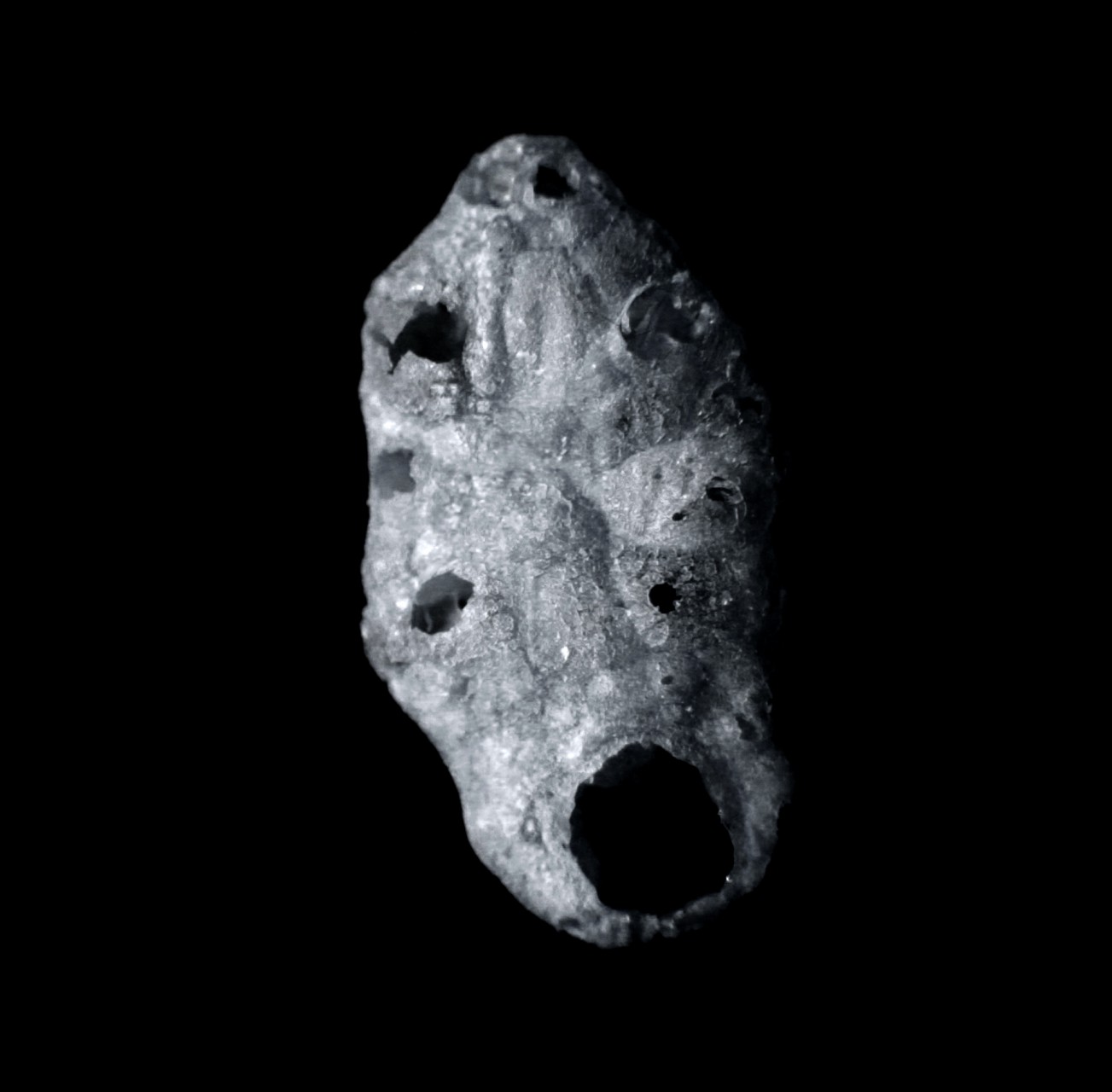
One look around Emily Scaife’s website is all it takes to see that this photographer is full of great ideas. Scaife uses photography, film making and illustration in her work and she has an extraordinary skill in turning the seemingly mundane into a visual delight, creating optical illusions by isolating her subject matter through either a macro lens, microscope or scanner and tricking us into thinking we’re looking at something entirely different. My favourite of these series are the ‘Cosmic Crispies‘. Scaife has given them the byline ‘Meteorological breakfast’ and they certainly make a wonderful feast for the eyes:
By photographing them in black and white against a pitch black background she makes them snap, crackle and pop in our brains as little asteroids (we’ve seen this type of imagery coming back from NASA – they’re not cheating and using Rice Crispies too are they?!). They are fascinating to look at and compare, who’d have thought each Crispie would be so different?
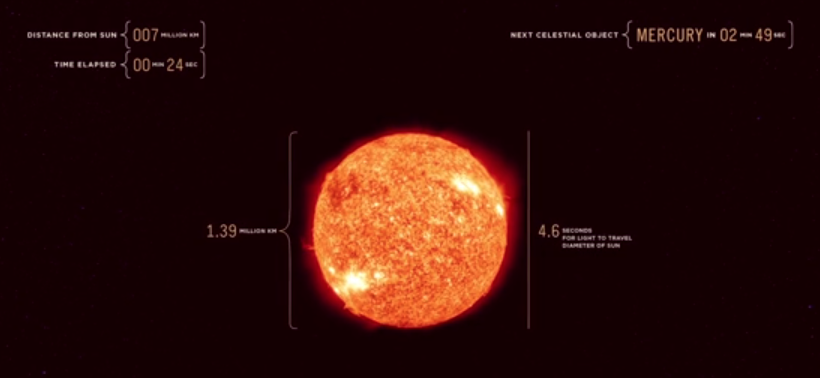
Sit back and relax as we prepare to take a journey from the surface of the Sun and through our Solar system at the speed of light. You may want to pop the kettle on though because it’s going to take quite a long time. The Speed of light isn’t all that fast.
We start our journey at the surface of the Sun.
As every school child knows, the speed of light is finite, and although in practical situations it appears instantaneous we are really experiencing everything we see in the past. At just under a 300,000 km per second (that’s about 1.3 seconds to the Moon) the speed photons and other massless particles travel at is intensely slow on a cosmological scale. The incredibly talented Alphonse Swinehart had the wonderful idea of creating an animation showing the actual speed a photon of light travels at after it has left the surface of the Sun. Continue reading →
With increasing frustration I’ve watched some of my gullible friends post this image in relation to today’s spectacular Solar eclipse. It’s cited as ‘The ISS took this photo of the eclipse today. #eclipse2015‘
Don’t be fooled, it’s fake. Besides they don’t have Photoshop on the ISS (or at least I don’t think they have.)
Maybe a touch of Photoshop happened here.
The real photographs taken by the astronauts currently stationed on the ISS are much more underwhelming. In fact, somewhat pleasingly they make all the ones I’ve taken look pretty good.
You can certainly sense a bit of embarrassment from that tweet, and quite rightly so. Poor Sam Cristoforetti who seems like an absolutely lovely person, is no match as a photographer to the now widely known Chris Hadfield.
Here’s a selection of the REAL photographs taken today during the Solar eclipse from NASA’s Flickr feed: Continue reading →
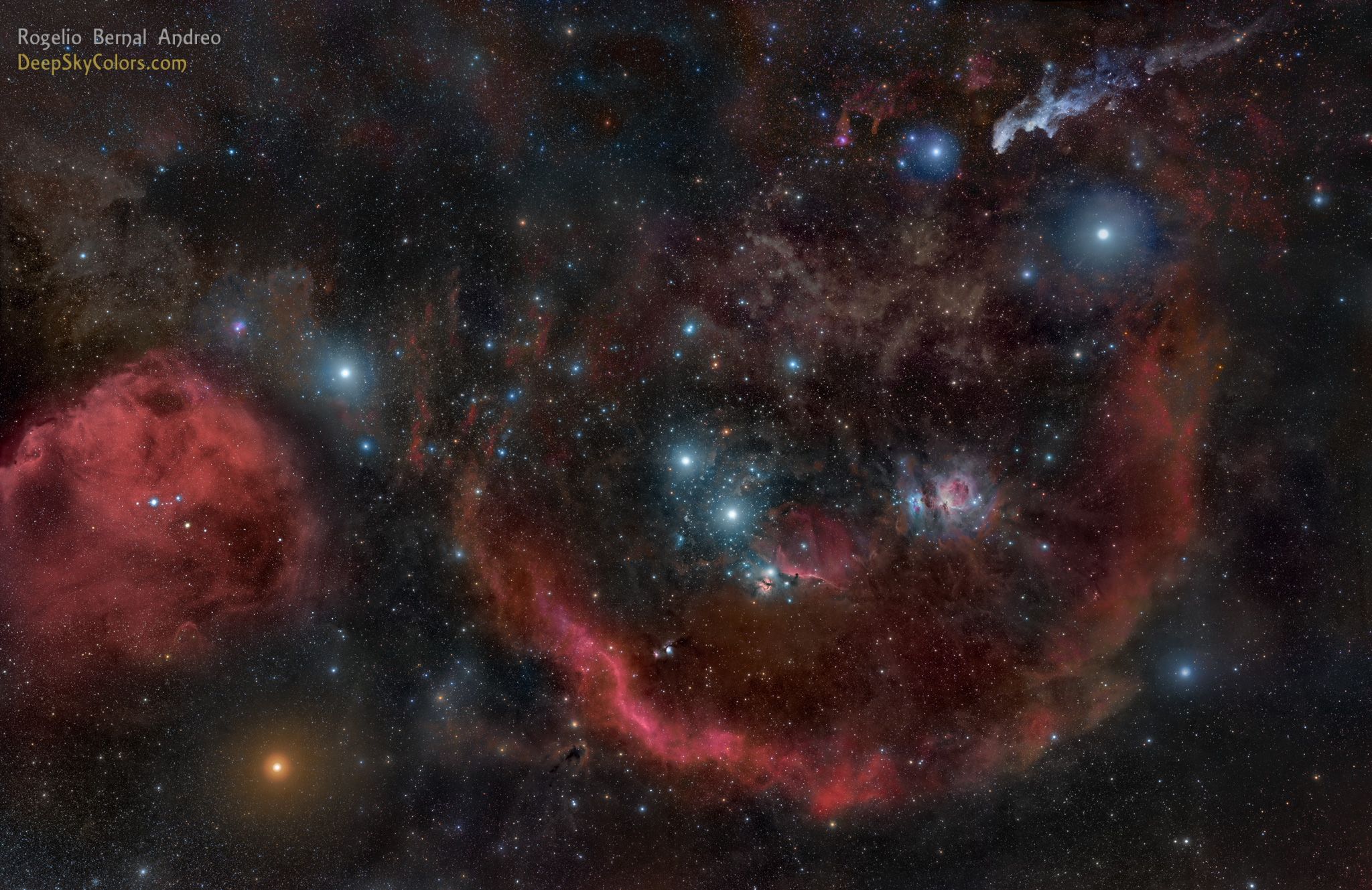
With no less than 33 images attributed to him on Astronomy Picture of the Day Rogelio Bernal Andreo is one of the most respected astrophotographers on the planet. In fact, his images are so beautifully clear, it’s hard to believe he’s taking them from inside our atmosphere.
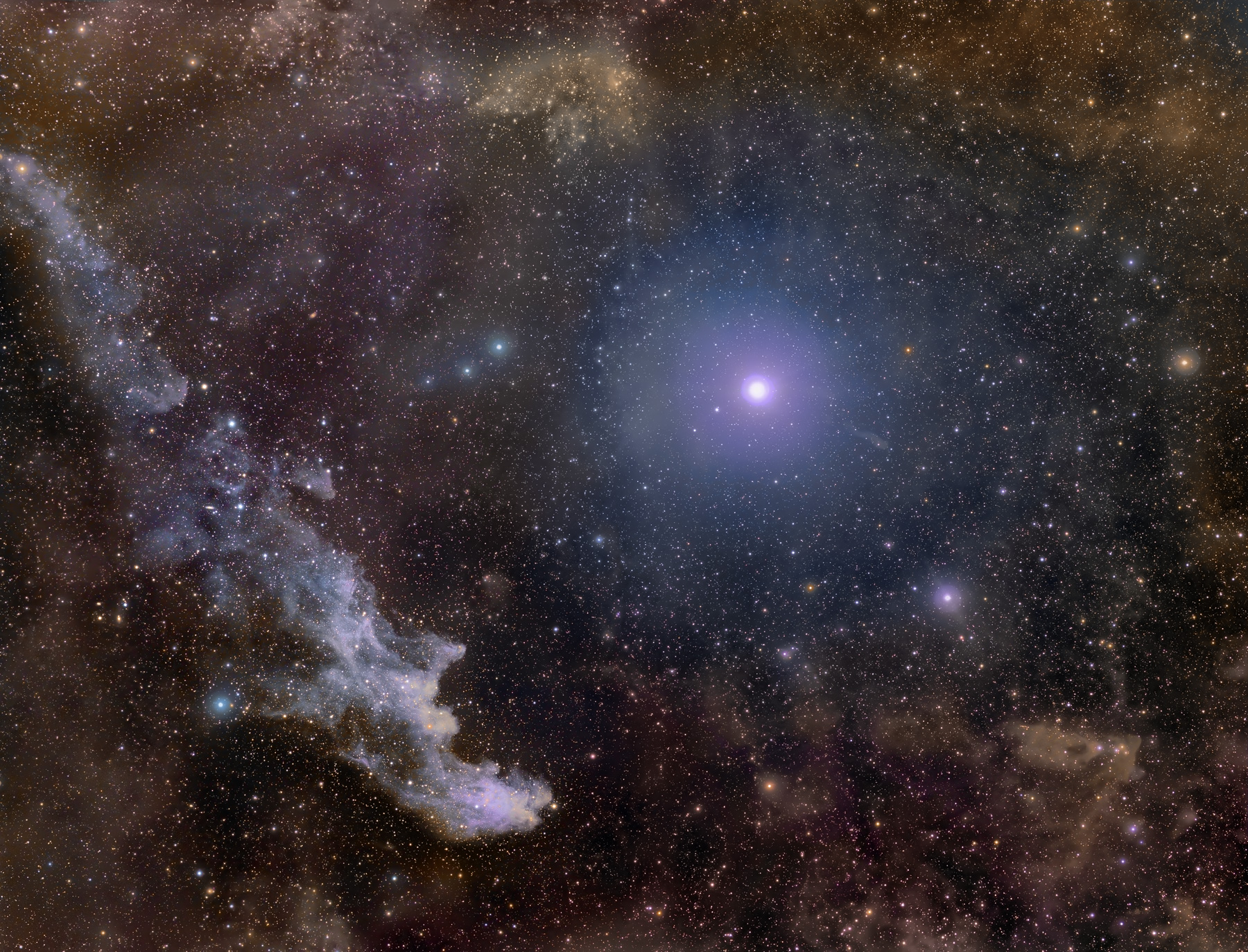
Recently this image of the constellation Orion has been receiving a growth spur and deservedly so as a meticulous amount of work was required to capture it. Amongst other things you can see the Witches Head nebula, the Flame nebula, the Horsehead nebula, Barnard’s Loop, the Running Man nebula and of course the Orion nebula. It is, as anyone in the Northern hemisphere will recognise an absolutely enormous part of the sky and to have such an incredible amount of detail there is breathtaking.
Orion Constellation | Rogelio Bernal Andreo
Of course you can’t see these gas clouds with the naked eye, although you would have some limited success with Orion’s nebula found in the middle of the sword with a pair of binoculars. To bring out more detail Rogelio made use of a narrow hydrogen alpha-filter and exposed for a total of 28 hours stitching together 32 images. Take a look at a detailed section of the top right revealing the ever spooky Witch Head nebula.
Witch Head Nebula | Rogelio Bernal Andreo
Rogelio began his astrophotography career like many of us; experimenting with is DSLR camera. Rogelio calls this his ‘introductory stage’ and has since moved on to dedicated CCD sensors to capture his images of the dark skies. Don’t worry though, ‘RBA’ as he’s known online still uses his DSLR to compose magnificent landscapes.
Take a look at just a small selection from his incredible portfolio starting with this stunning image of Simeis 147 and its surroundings. Continue reading →
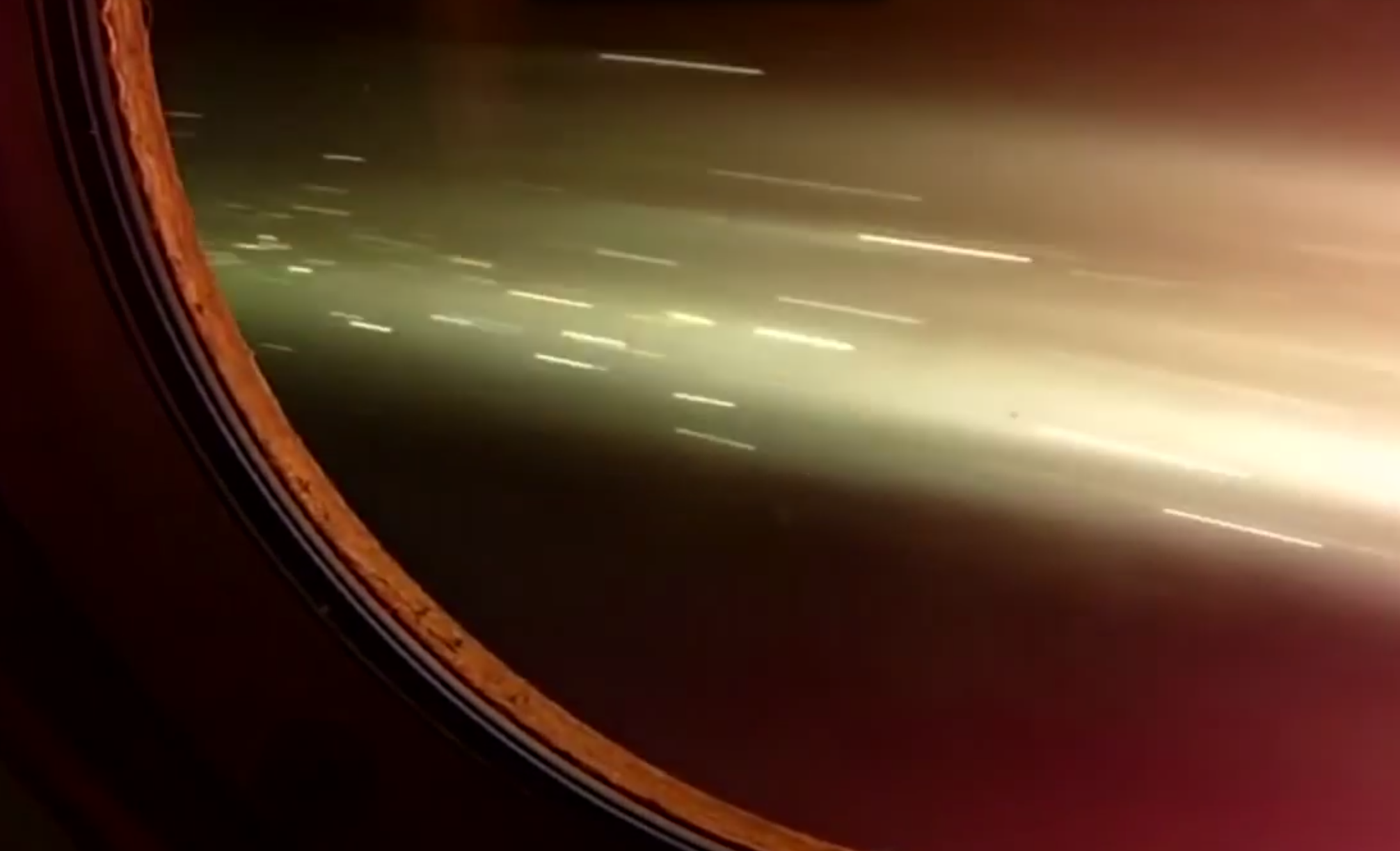
During a 17 minute video uploaded to NASA TV’s Youtube channel this week we were privy to the short, but explosive moment that can be seen from the Soyuz capsule window during reentry to the Earth’s atmosphere.
The terrifying ordeal that every astronaut prepares for is only visible in the video for a brief 10 second moment. The hypnotising loop of colours, sparks, reds and yellows wouldn’t look out of place as a scene in Interstellar, Chris Nolan’s new Space epic.
Gizmodo put together a short Gif so you can experience the moment on loop.
Soyuz Exterior Window During Reentry into Earth’s Atmosphere
This DIY rig and some free software is all David Schneider needed to detect a known exoplanet.
Just five years ago NASA launched the Keplar spacecraft into orbit at a cost of $600 million dollars on a quest to search our Milky Way galaxy for signs of exoplanets, or planets orbiting stars other than our own. In November, amateur astronomer David Schneider managed to detect one in his back yard using less than $500 of DSLR equipment. In fact, he didn’t even use a telescope.
Schneider, also a senior editor at IEEE Spectrum like the rest of us thought that only hardcore astronomers using expensive imaging and radio equipment had the tools to detect exoplanets. That was until he came across the KELT-North project by Ohio State university. whereby a group of students who had repurposed a CCD sensor to a high end camera lens and were able to detect several previously known exoplanets. With the amateur astrophotographer in mind, Schneider challenged himself with visualising an exoplanet with standard camera equipment.
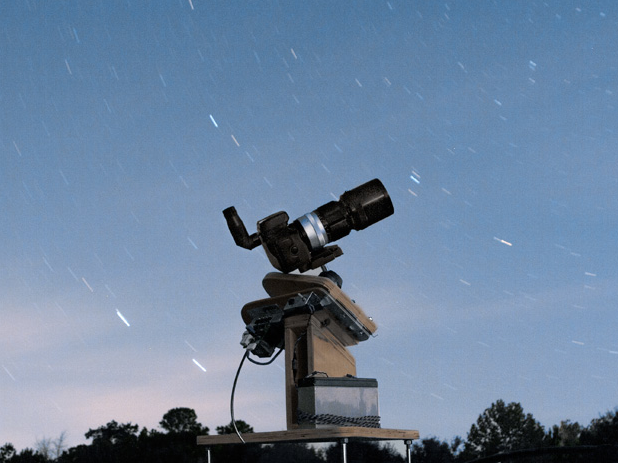
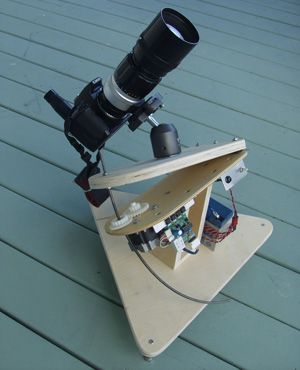
Apart from requiring a standard sky tracker mount – An electronic geared system that guides your camera along the equatorial, thereby following the night sky – which would cost anywhere between $100-$1000 the only tools needed for the job were a DSLR camera, tripod and telephoto lens. What makes this even more remarkable is that Schneider used a $72 Nikon lens, with a Canon convertor ring to do the job – Heath Robinson or what?
Schneiders DIY Exoplanet Detecting Kit
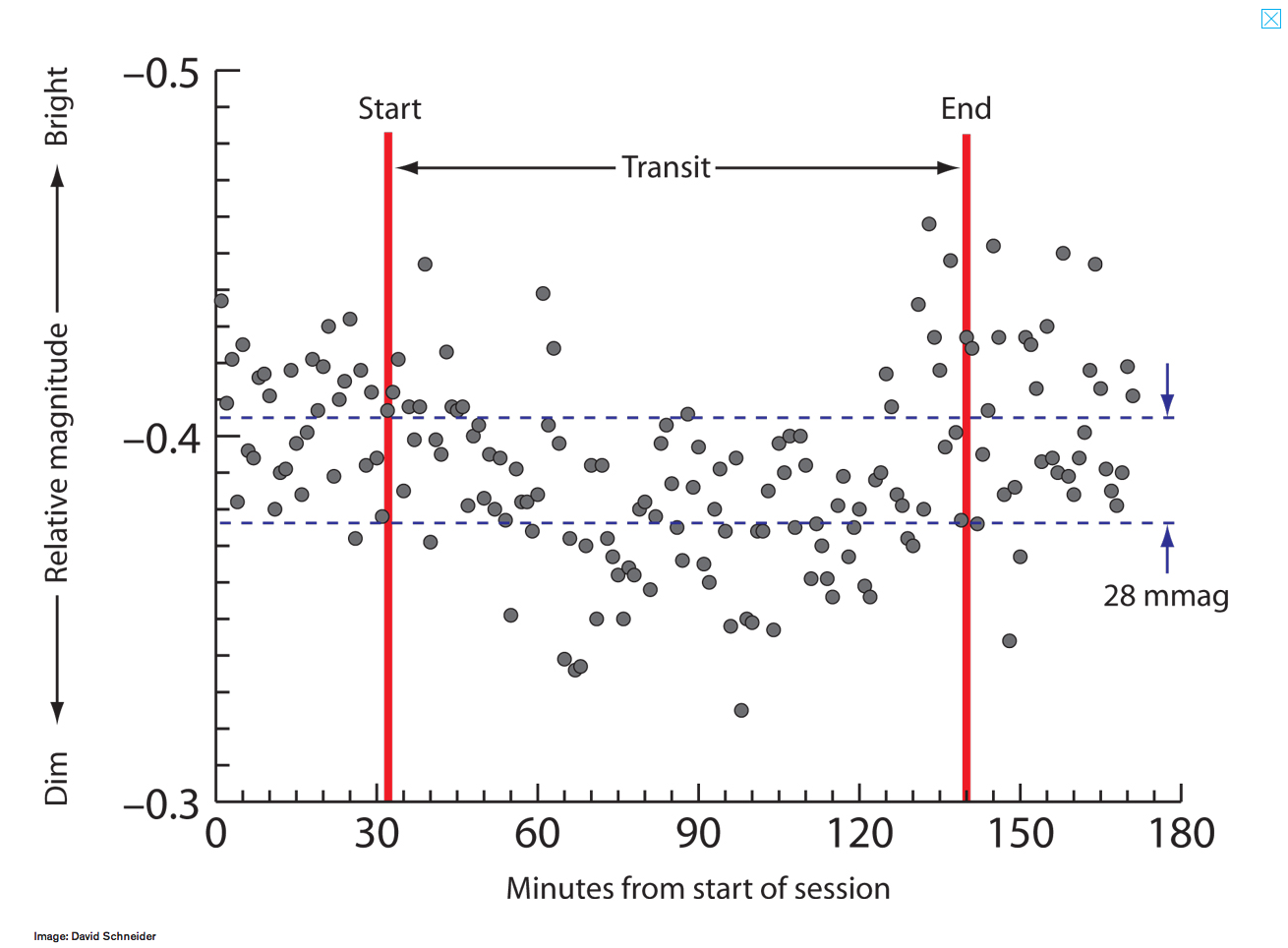
The star chosen in question was HD189733, known to home a massive Jupiter sized planet that orbits the star once every three days. Perfect for this experiment. What Schneider would be looking out for is the transit period, where the planet passes in front of its home star thus causing a dip in brightness. This is known as transit photometry, the most commonly known way to discover exoplanets.
The dip in brightness is unfortunately too insignificant to visualise in a pair of photo frames, not to mention the many variables that would effect any attempt at detection this way, so Schneider downloaded some free software to automatically analyse the different frames taken which revealed, as expected a transit period of about 1 hour and 48 minutes. The data visualised into a photometry chart reveals, with no stretch of the imagination a dip in brightness. We are sure that if the experiment was repeated several times the curve would only get more apparent.
Light Curve Obtained during Exoplanet Transit
What I feel is most important about Schneider’s ‘discovery’ is that even though this particular exoplanet is a well known object, it proves that anybody with a camera and just enough knowledge can search for their very own exoplanets. I hope, no, I expect the first completely amateur exoplanet discovery to be made soon and I believe David Schneider will be able to take some credit in that.




 Phogotraphy