Death by Selfie – Professional Base Jumper Unwittingly Predicts his own Death in Selfie

This is one of the last pictures of Gareth Jones, a selfie of his legs dangling off a cliff from a few hundred feet up. A few days later Gareth would be involved in an accident at this very spot and fall 300 feet to his death.
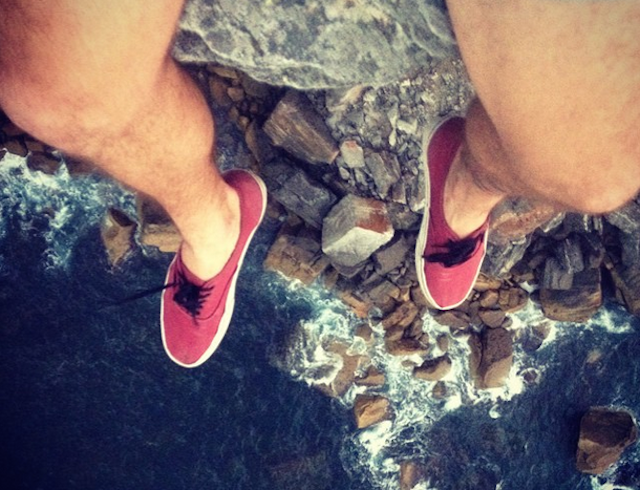
Gareth Jones uploaded the Selfie to his Instagram account

Gareth’s Instagram feed shows he was a guy full of adventure and enjoyed extreme sports including base jumping. Unfortunately this lifestyle would ultimately lead to his death. Gareth was reportedly seeking a better view of the sunrise when the accident occurred.

This wasn’t your typical photographer losing his footing, Gareth was a professional base jumper who had performed dozens of amazing stunts in the past. Recently he launched himself with nothing but a parachute from the top of the Menara Tower in Kuala Lumpur.
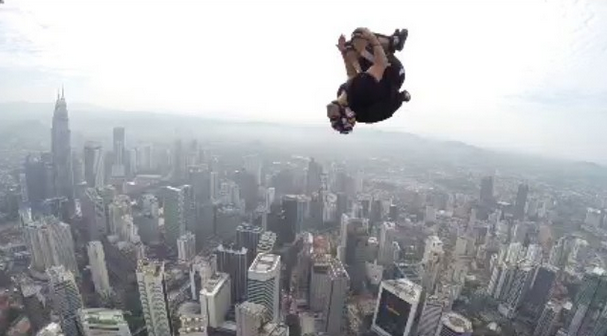
Gareth Jones was a professional basejumper, and a natural thrill-seeker.

Even sadder is the fact that Gareth wasn’t the first person to meet his end whilst reaching for the perfect shot. Chris Illuminati of BroBible put together a list of recent tragedies involving the the new extreme-selfie craze. He presents it well:

While the issues and dangers that selfies pose on the mind and body are important, they’re not always measurable in all people. The actual deaths of people in the name of the awesome and enviable self portrait are quantitative. Here are just some of the tragic cases of deaths linked directly to selfies.

  • A 32-year-old woman in North Carolina was killed in a head-on crash with a truck. Investigators were told by her friends and family that she made a Facebook post in the moments before the crash. The woman posted a photo of herself, behind the wheel, reacting to the song “Happy” by Pharrell.
  • A month short of her 18th birthday, a teen fell off a railway bridge and was electrocuted by 1,500 volts as she tried to grab wires to break her fall. It’s believed the teen climbed the 30 feet onto the bridge to take a selfie.
  • Two men were trampled to death by an elephant in the Kiptagich Forest in Africa. The men were touching the elephants trunk and attempting to take selfies when the beast whipped the two to the ground and trampled over them to flee. The elephant was gunned down by Kenya Wildlife Service and Kenya Forest Service rangers in an attempt to save the men.
  • A Polish nursing student fell to her death while trying to take a selfie from the ledge of the Puente de Triana Bridge in Seville, Spain. According to witnesses, the woman lost her footing and fell 15 feet down to the concrete.
  • A 16-year-old Italian high school student attempted a selfie during a school trip in southeastern Italy. The young girl fell 60 feet onto jagged rocks and suffered injuries to her femur, pelvis and head. The teen was rushed to the hospital where doctors attempted to save her but she eventually succumb to her injuries.
  • A 21-year-old man from northern Mexico wanted a selfie for his Facebook page and used his live firearm as a prop in the picture. The gun discharged and shot him in the head.
  • A 13-year-old girl was visiting the El Tunal River in Mexico this past summer. She slipped and fell into the water while taking a selfie and the strong currents swept her away. She drowned and her body was recovered some time after the accident.
  • A family vacation in Cabo da Raca, Portugal turned tragic after a mother and father fell to their death while posing beyond a safety barrier over a cliff. Their two young children watched as the couple plummeted to their death.
  • A man climbed to the top of the train in Andujar, Andalusia, Spain to try to take a selfie. Unfortunately, during his selfie attempt, he touched a live wire and suffered a 3,500 volt shockwhich proved to be fatal.

We certainly don’t condone any type of dangerous activities to get the perfect selfie and at the same time we wouldn’t prevent anybody from pushing the boundaries of photographic genres, even the narcissistic selfie! But please, if you are someone who likes to take risks, please be careful and think of Gareth Jones, and what happened to an experienced professional before you do.


h/t Chris Illuminati of BroBible.
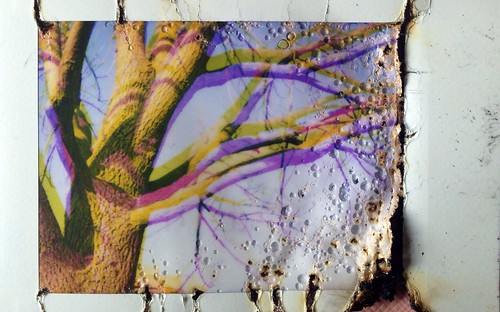
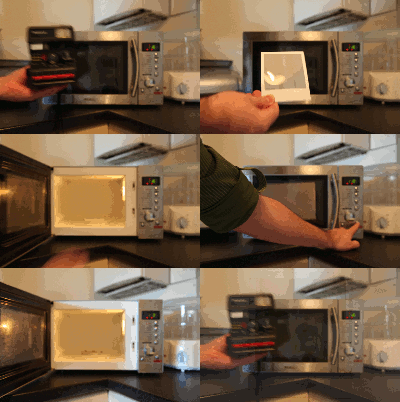
Microwaved Polaroids, Because Why Not?

You know what it’s like. You’ve just taken a fantastic photo with your latest instant camera but there’s something missing, it just hasn’t got that spark…

Instax tree double exposure microwaved

Enter the very strange world of ‘Microwaved Polaroids’ an old photography group on Flickr that has reared its head and come to my attention. Call it art, call it dangerous, call it inspiration but just don’t call it boring. From just this handful of images a microwaved Polaroid (or Instax) has a certain appeal to fans of the LOMO movement and abstract photography. It’s hard to deny that by damaging a photo this way isn’t adding an extra physical layer of meaning.

Even defunct frames that haven’t quite managed to develop properly can suddenly become startling beautiful. It’s difficult to judge exactly where the cracks, burning and bubbling will occur, so serendipity plays a roll in some of the more interesting pieces.

The group blurb gives some simple instructions:

Q: I want to join in with the fun, but I’m scared I’ll burn the house down. Will this hurt?

A: 5 seconds will be ample time to turn your reject Polaroid into a work of art. Make sure the room is well ventilated as it’s a little bit smelly. There will be sparks, but in 10 years I’ve never split an atom. Good luck.

And as an added bonus, a short instruction Gif Video:

How To: Nuke a Polaroid.

Enjoy this small selection and then head over to the group’s pool to explore a bit more. Continue reading

Moment Mile: 138 Photographers Join Together on One Street to Create a 1-Mile long Panorama

It’s wonderful when photographic communities get together and create something special, and that’s just what the project Moment Mile did on November 1st 2014.

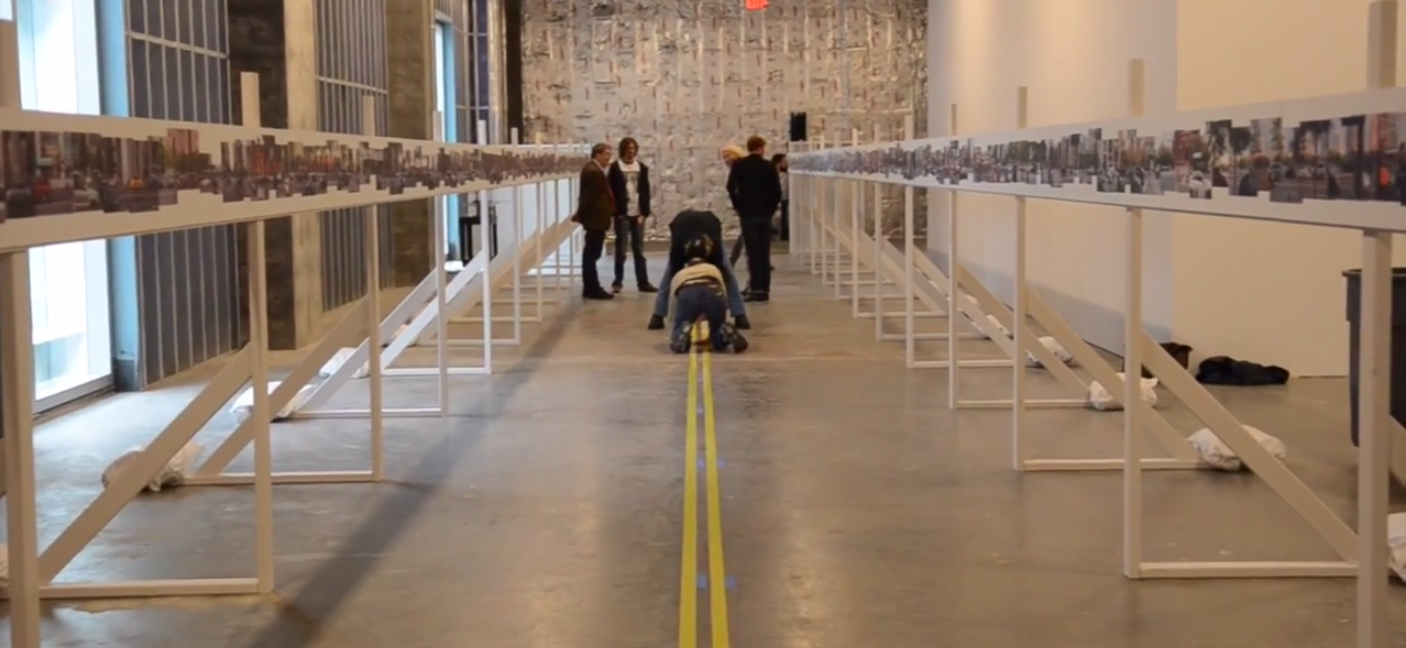
#MomentMile Exhibition Installation Takes Place.

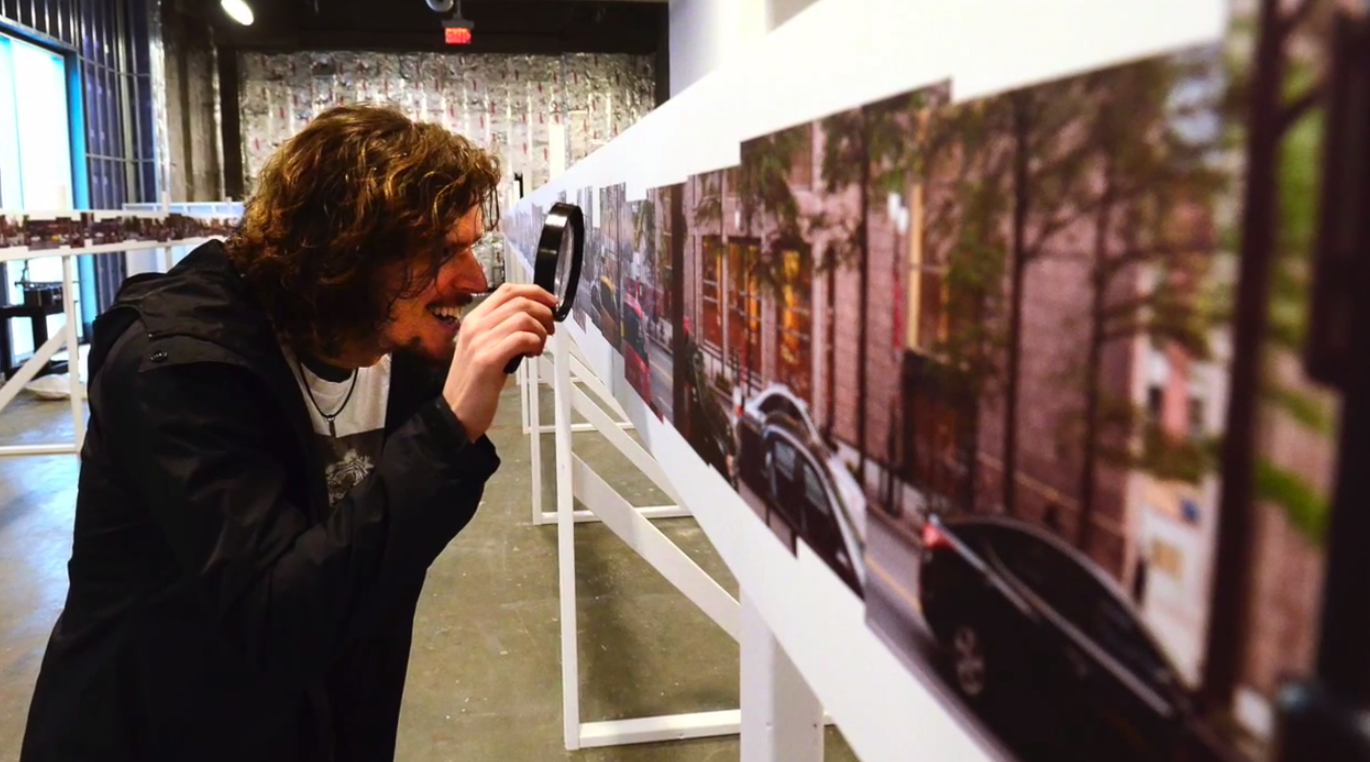
Organised by conceptual photographic artist Sean Busher, the plan was to gather 138 local photographers together in the Charlotte NC area to create a gigantic 1.2 mile long panorama of Tryon Street. Then at a specific time, to the second, every single photographer lined up along the street would take a single frame and create what may possibly be the largest, seamless moment in time panoramic photograph ever.

Sean says “There was so much that could’ve gone wrong with this project, I was fearful there would be holes all along these two massive panoramics…” [sic] however as it turned out all 138 photographer’s cameras worked (phew.)

Sean Busher at inspecting the Panorama at the Moment Mile Exhibition

The project was put on to celebrate the reopening of The Light Factory a contemporary gallery of photography and film in Charlotte. On display during tonight’s opening (17th December 2014) will be two 100 foot long panoramas, which you can see in part towards the end of the ‘Making of’ video uploaded to Youtube below.

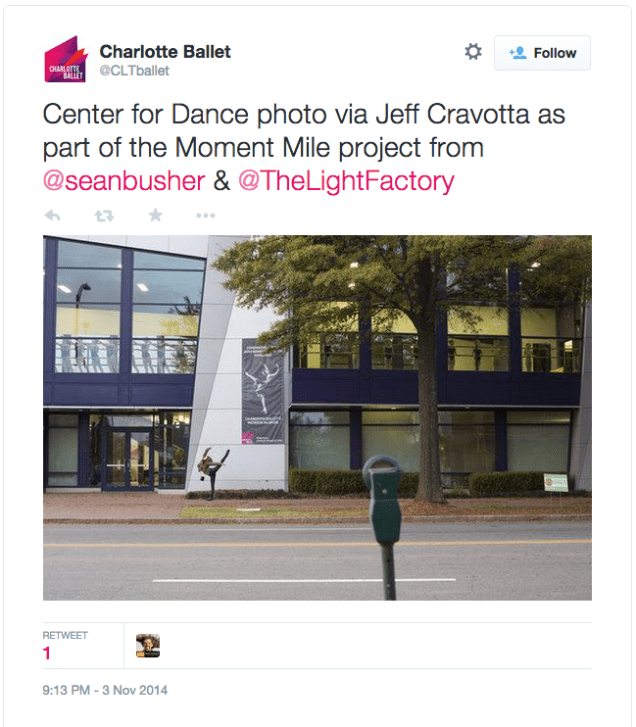
If you’re desperate to see an online version of the panorama, you’ll have to wait for the time being as an exclusive unveiling at the Mint Museum, 500 S. Tyron is happening right now. There have been a few frames ‘leaked’ to Twitter, like this unusual image by Jeff Cravotta outside of the Centre for Dance.

Jeff Cravotta's Submission to Moment Mile
Jeff Cravotta’s Submission to Moment Mile

You can also get a sneak preview of the exhibition in this video by the Charlotte Observer which gives away some details including the wonderfully placed ‘double yellow line’ (that’ll confuse the British folk) running between both East and West facing panoramas.

We’ll update this post as soon as an online version of the Panoramas are available.

Short Video of Terrifying Moment Astronauts Reenter Earth’s Atmosphere from Inside the Soyuz Capsule

Screencap of Soyuz Capsule Reentry

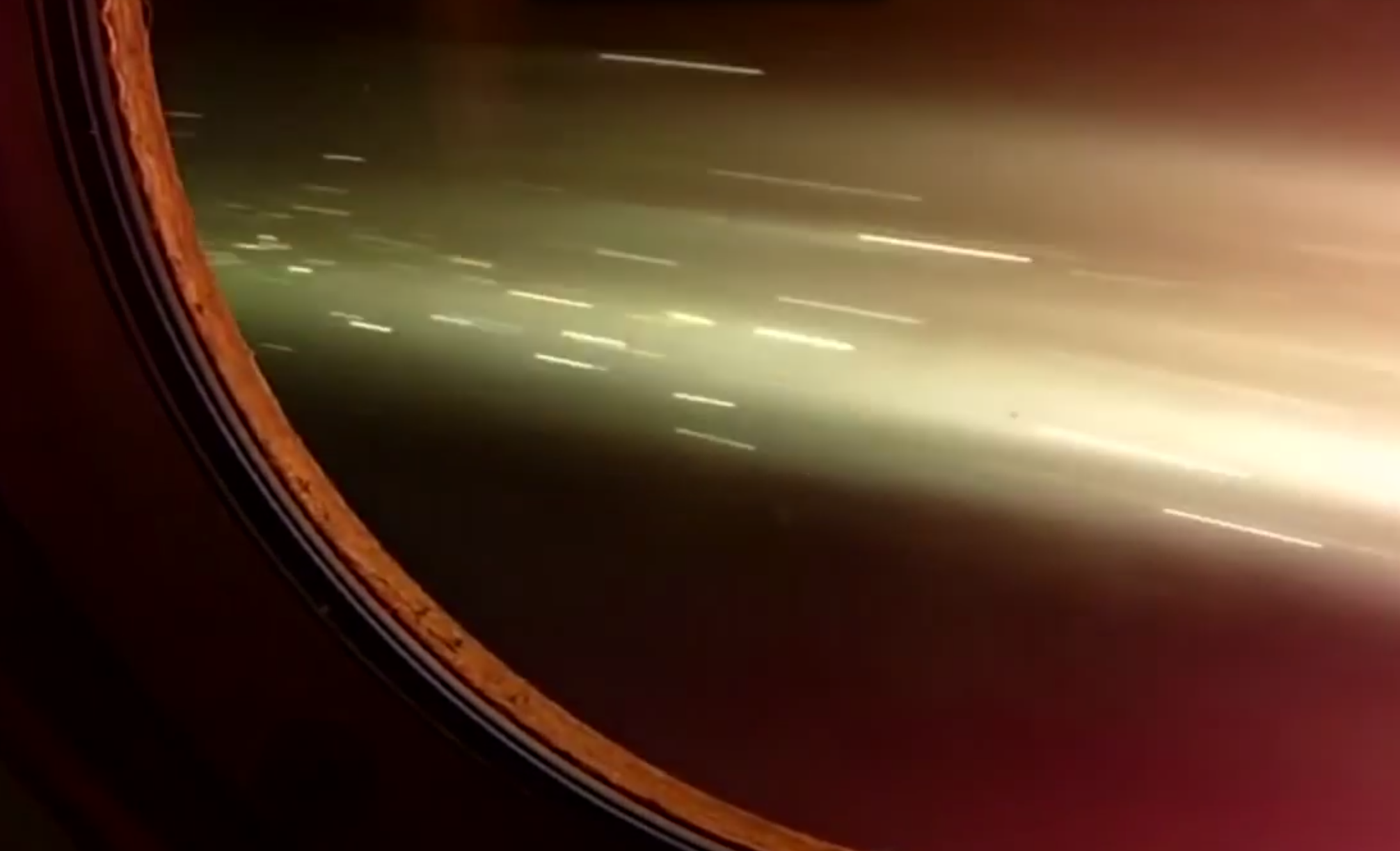
During a 17 minute video uploaded to NASA TV’s Youtube channel this week we were privy to the short, but explosive moment that can be seen from the Soyuz capsule window during reentry to the Earth’s atmosphere.

The terrifying ordeal that every astronaut prepares for is only visible in the video for a brief 10 second moment. The hypnotising loop of colours, sparks, reds and yellows wouldn’t look out of place as a scene in Interstellar, Chris Nolan’s new Space epic.

Gizmodo put together a short Gif so you can experience the moment on loop.

Soyuz Exterior Window During Reentry into Earth’s Atmosphere

Amateur Astronomer Detects Exoplanet using low-end DSLR and $92 Lens

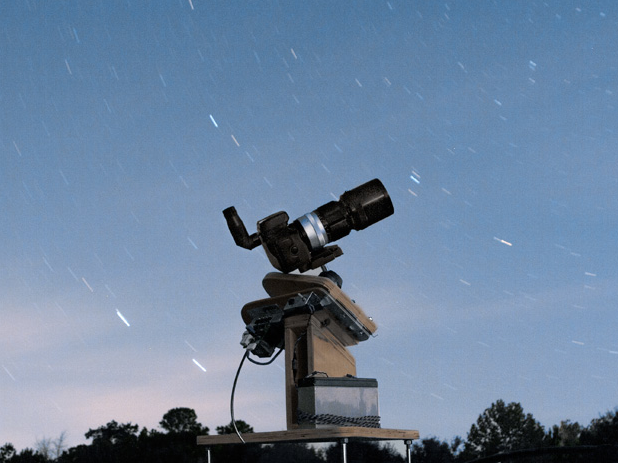
This DIY rig and some free software is all David Schneider needed to detect a known exoplanet.

Just five years ago NASA launched the Keplar spacecraft into orbit at a cost of $600 million dollars on a quest to search our Milky Way galaxy for signs of exoplanets, or planets orbiting stars other than our own. In November, amateur astronomer David Schneider managed to detect one in his back yard using less than $500 of DSLR equipment. In fact, he didn’t even use a telescope.

Schneider, also a senior editor at IEEE Spectrum like the rest of us thought that only hardcore astronomers using expensive imaging and radio equipment had the tools to detect exoplanets. That was until he came across the KELT-North project by Ohio State university. whereby a group of students who had repurposed a CCD sensor to a high end camera lens and were able to detect several previously known exoplanets. With the amateur astrophotographer in mind, Schneider challenged himself with visualising an exoplanet with standard camera equipment.

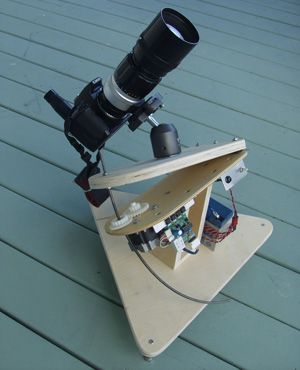
Apart from requiring a standard sky tracker mount – An electronic geared system that guides your camera along the equatorial, thereby following the night sky – which would cost anywhere between $100-$1000 the only tools needed for the job were a DSLR camera, tripod and telephoto lens. What makes this even more remarkable is that Schneider used a $72 Nikon lens, with a Canon convertor ring to do the job – Heath Robinson or what?

Schneiders DIY Exoplanet Detecting Kit

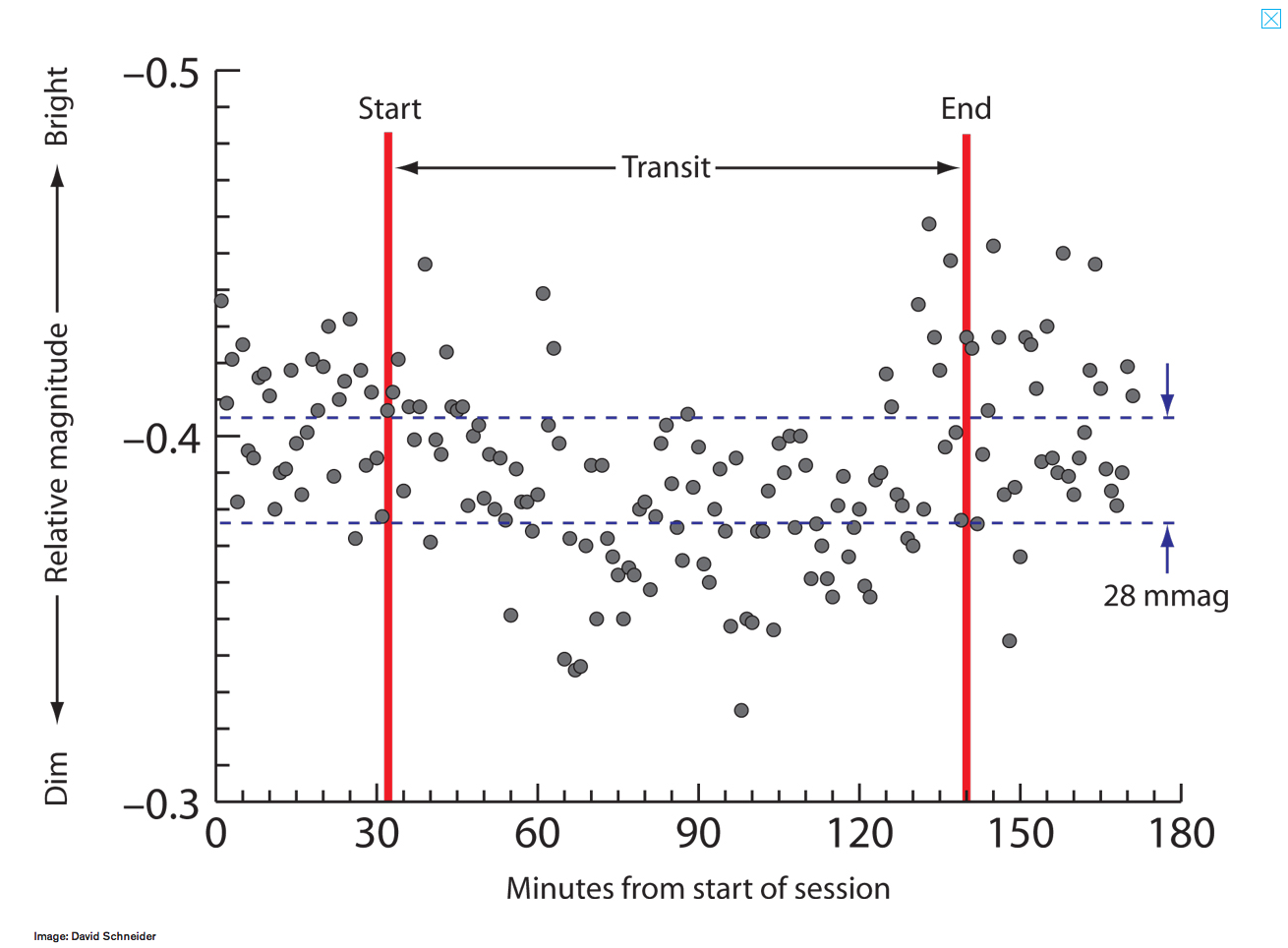
The star chosen in question was HD189733, known to home a massive Jupiter sized planet that orbits the star once every three days. Perfect for this experiment. What Schneider would be looking out for is the transit period, where the planet passes in front of its home star thus causing a dip in brightness. This is known as transit photometry, the most commonly known way to discover exoplanets.

The dip in brightness is unfortunately too insignificant to visualise in a pair of photo frames, not to mention the many variables that would effect any attempt at detection this way, so Schneider downloaded some free software to automatically analyse the different frames taken which revealed, as expected a transit period of about 1 hour and 48 minutes. The data visualised into a photometry chart reveals, with no stretch of the imagination a dip in brightness. We are sure that if the experiment was repeated several times the curve would only get more apparent.

Light Curve Obtained during Exoplanet Transit

What I feel is most important about Schneider’s ‘discovery’ is that even though this particular exoplanet is a well known object, it proves that anybody with a camera and just enough knowledge can search for their very own exoplanets. I hope, no, I expect the first completely amateur exoplanet discovery to be made soon and I believe David Schneider will be able to take some credit in that.

h/t Petapixel via Spectrum IEEE

The ‘Wobble’ Made Whilst Holding a Video Camera is as Unique as a Fingerprint

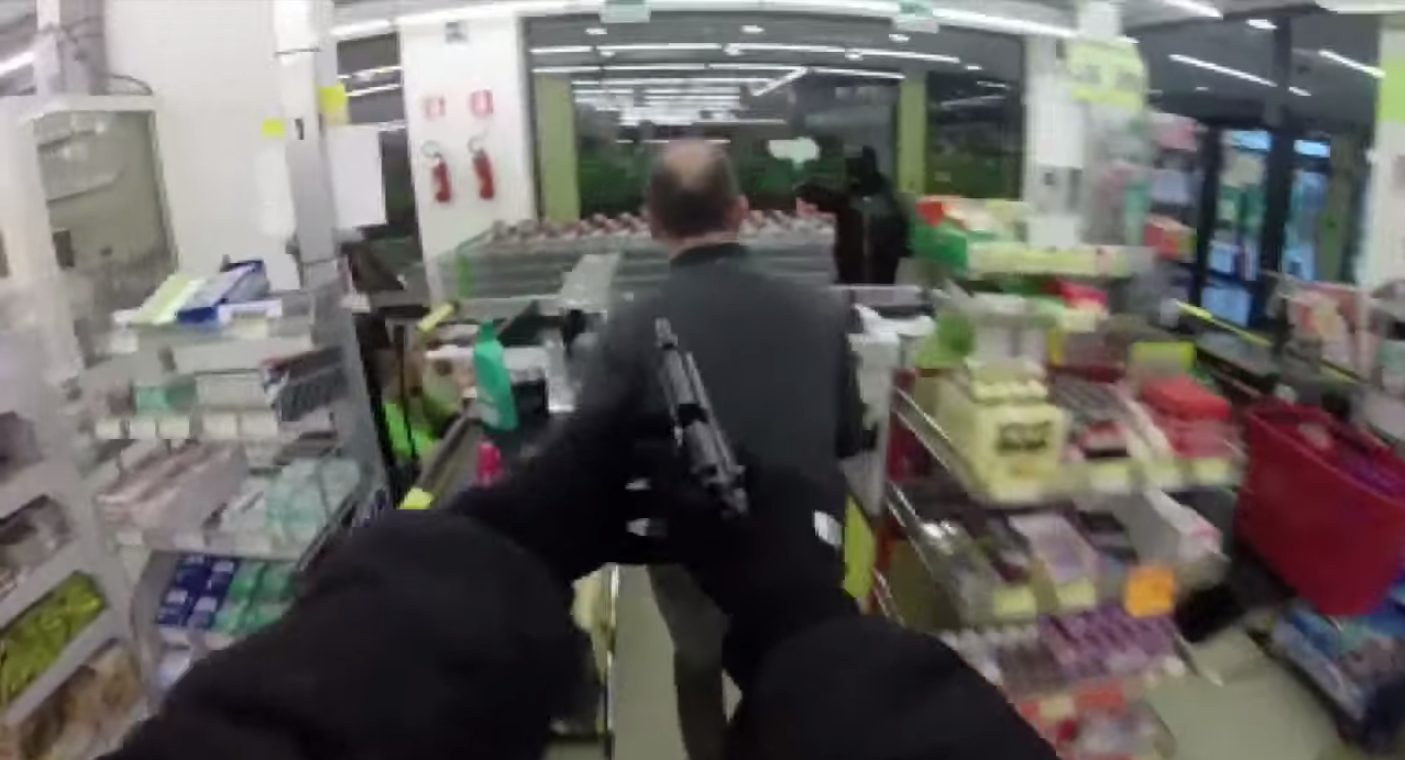
Remember this? Go-Pro wearing robber terrofies shoppers in Italy.

Surveillance just added another weapon to its growing arsenal; identification by wobble, or as described in the recently published paper in Egocentric Video Biometrics “a person’s gait.”

Using data compiled from videos created by GoPro cameras mounted onto the helmets of 34 different subjects, researchers Yedid Hoshen & Shmuel Peleg of Cornell University were able to identify unique signatures in the differentiating wobble from just four seconds of camera footage. This, they say will compromise ego-centric (mounted) camera wearers anonymity, although it could have some benevolent uses. Your newly purchased camera can be tailored to recognise only your movements which may prevent some thefts, or user analytics on video sharing websites.

Screen Shot 2014-12-15 at 15.03.12
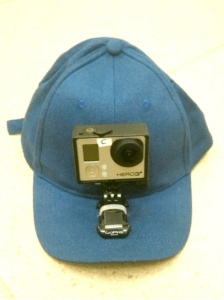
One of the Go-Pro Hero3 cameras mounted to a baseball cap.

The experiment has only so far been performed with baseball cap mounted Go-Pro cameras but researchers plan on expanding the tests to include Google Glass and body mounted surveillance cameras such as those soon to be in use after the order of 50,000 units for the US police force was approved.

Perhaps we can finally learn the truth behind the Italy Go-Pro camera robbery in which an armed robber enters a supermarket and terrifies the public whilst looting. If you’ve not seen that, you’re in for a thrill:

We’re one step closer to Completing the Circle, although I have to admit to not considering this method of surveillance before. Scary stuff or much needed improvements in tech? Leave your comments below.

h/t The Verge