When Kim Kardashian released her new photography book ‘Kim Kardashian West: Selfish’ last week it was ironic that any image taking was banned, including anyone wanting to take a selfie of themselves, at her book signing at Barnes & Noble, NY. ‘Selfish’ is a selection of some of the many selfies taken by Kardashian during the last few years and it seemed a little unfair that her fans were blocked from doing the very thing she was selling.
TV Personality Kim Kardashian with security guard Pascal Duvier signs copies cf ‘Selfish’ at Barnes & Noble, 5th Avenue on May 5, 2015 in New York City. (Getty Images).
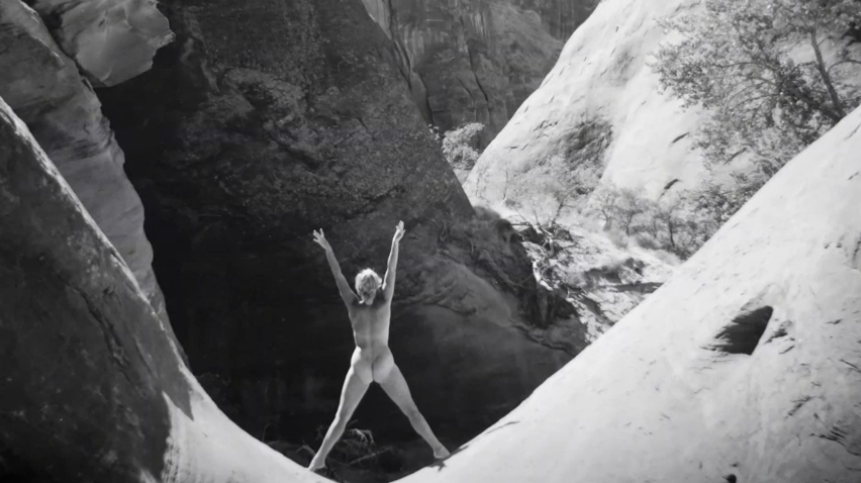
Damnation is a documentary by Ben Knight and Travis Rummel that explores the way the building of dams across the United States has altered landscapes. In this short excerpt from the film they talk to Katie Lee, Hollywood starlet turned activist who ‘walked naked through Glen Canyon’.
ABOVE: X-Citing by Martin D. Koehler which appears in the film.
Placed throughout the interview are a series of incredible photographs taken inside the canyon featuring an evocative Lee, which has now been flooded by the lake created when the dam was installed. Despite the passive photographs, Lee now in her 90s quite candidly tells the interviewer about Floyd Dominy who organised the canyon’s destruction “No I’ve never met him, I’d have cut his balls off if I’d have met him”. Continue reading →
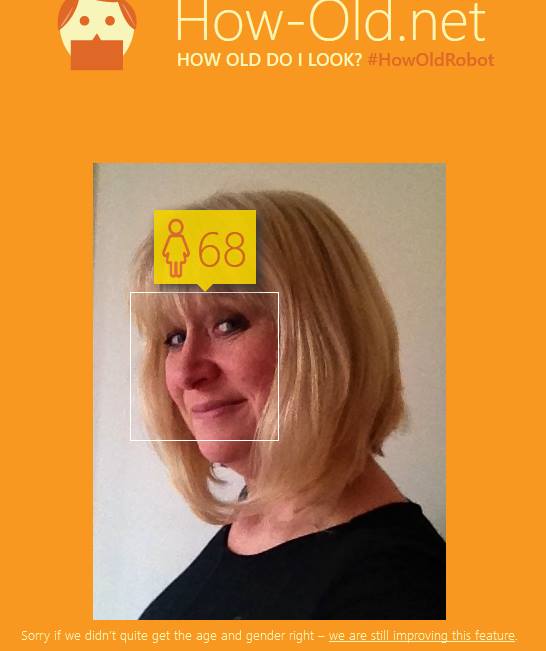
No doubt you’ve already seen friends sharing screenshots of the Microsoft powered website how-old.net on your Facebook newsfeed. Within hours of its release it had gone viral, which is mildly unusual as it’s not a new idea by any means. Despite it being absolutely appalling at guessing people’s age it’s been a hit.
But did you read the fine print? Tucked away several paragraphs down in the Terms of Use is this long sentence. Continue reading →
Synaesthete James Wannerton experiences a sensation of taste in his mouth when he hears different words and sounds. Teaming up with photographic artist Sam Cornwell they have created a visually stunning set of photos as part of a synaesthesia style campaign for the UK’s 2015 general election.
James says the tastes he experiences are involuntary and in no way reflect political allegiances he may hold. The fact Nick Clegg gives him the disgusting sensation of a meatless bone of lamb is neither here no there. While ‘Labour party’ derives a taste of vinegary chips, ‘Conservatives’ taste of hard toffee and these sensations cannot be changed.
ABOVE: David Cameron / Conservatives tastes of hard toffee, macaroons, blue ink & the texture of cloth.
Representing the seven main political parties, the posters are linked by only the cursive line of a restaurant table draped in the party colours. James says he can elaborate extensively on the tastes he experiences with words. He explains The Liberal Democrats and Nick Clegg without holding back: Continue reading →
A change in the law will allow photographers to pay rent on their homes & studios with ‘exposure’ instead of money. They will also be able to buy coffee, shampoo and other essentials, by mentioning to the checkout assistant that they did a big job last week for nothing, and are hoping it will bring them some paying clients.
Landlords and supermarkets are protesting this move, on the grounds that “Well what the hell am I supposed to do with ‘exposure’? I can’t pay my bills with fresh bloody air! Why can’t you just give me money like every bugger else?” Continue reading →
It’s mostly been by people who can’t read properly and are therefore already at a disadvantage, however to be completely fair we’re going to flip things on their head and take a look at reasons why a photographer would choose to shoot digital instead of film.
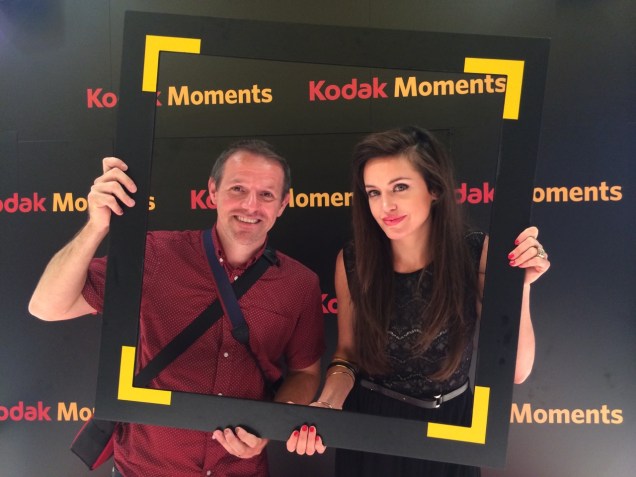
The perfect Kodak moment now only comes in digital.
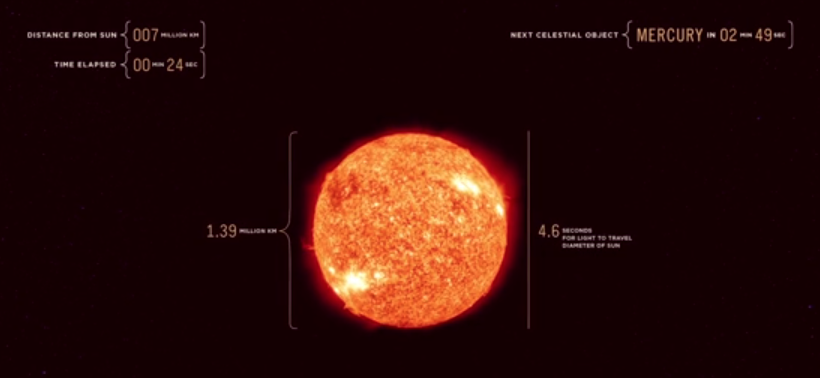
Sit back and relax as we prepare to take a journey from the surface of the Sun and through our Solar system at the speed of light. You may want to pop the kettle on though because it’s going to take quite a long time. The Speed of light isn’t all that fast.
We start our journey at the surface of the Sun.
As every school child knows, the speed of light is finite, and although in practical situations it appears instantaneous we are really experiencing everything we see in the past. At just under a 300,000 km per second (that’s about 1.3 seconds to the Moon) the speed photons and other massless particles travel at is intensely slow on a cosmological scale. The incredibly talented Alphonse Swinehart had the wonderful idea of creating an animation showing the actual speed a photon of light travels at after it has left the surface of the Sun. Continue reading →
This year will mark forty years since the invention of the first functioning digital camera, and despite it being a measly 0.01 Mp it heralded a new age of digital photography and with it came a death cry for film.
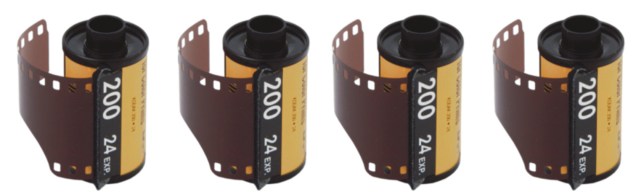
Yup, film is still very much in use by photographers. (Click for an Amazon Link)
Prompted by this incredibly dull article published recently by the BBC I decided to ask some fellow photographers what reasons they had for still shooting the so-called outdated technology. Here’s the list…
1. Film Photography was Already Perfect.
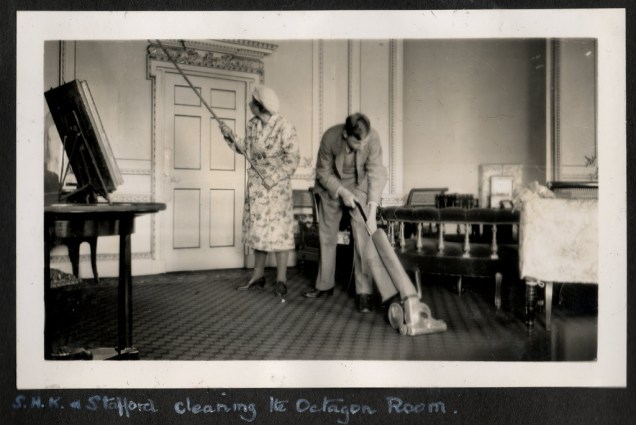
Those of us lucky enough to have photo albums from the ’90s and before tucked away in our parents’ homes will undoubtedly take great joy in flicking through the tattered card pages, looking through the embarrassing portraits, day trips to the zoo, the beach, birthday parties and that time our trousers fell down in the park. The point I’m making is these vernacular photo albums were perfect and they were all shot on film.
Even old Photo Albums Found at Junkyard Sales have that Perfect Photographer’s Touch
Fast forward to today and we’re not only making fewer albums, we’re taking more photographs to get that perfect shot. Even our smartphones are littered with countless portraits of our children, nieces and nephews, because the photo before could have been just a little bit better. Back in the day of film photography we didn’t worry about that and those photo albums that we look back on are still as perfect today as when our parents first stuck them down.
This morning I stumbled on to the wonderfully engineered Word.Camera website via a PetaPixel blog post. The premise is simple: Convert a jpeg into somewhat meaningful English language.
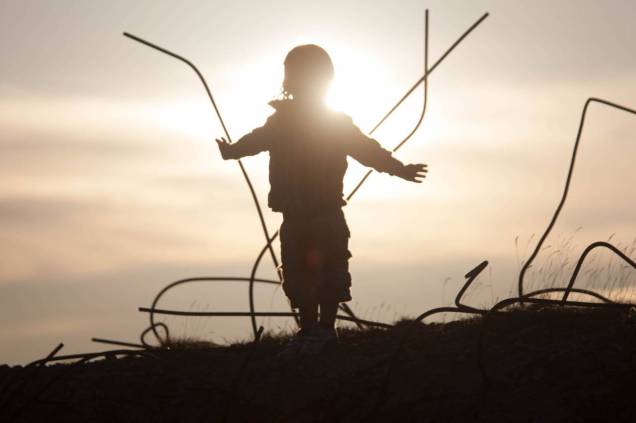
To test it out I uploaded this small jpeg of my son on top of an abandoned building, silhouetted by the Sun.
I gave the computer an unusual image with plenty of contrast to decipher.
It took the algorithm a few minutes to process an answer. Finally I was presented with several paragraphs of text giving a better than vague description of the image it received:
Of course, a barbed wire, a men, and an energy. Thus, the barbed wire remains unknown. The men evokes typing, and the energy is made from an enterprising or ambitious drive. Probably, the barbed wire remains unknown.
…Yet, a silhouette and a sunset: the silhouette evokes outlining, and the sunset is not the time in the evening at which the sun beginning to fall below the horizon.
Ok, it’s a little jumbled, but understandable English for anyone who has at least a slim grasp on the language. The prose has a familiar air of poetry about it and perhaps with a little human refinement could even be passed off as professional.
I spoke to David Phillips, who operated a poem a day blog in 2014 to ask his thoughts on how the computer algorithm could shake up the industry. Continue reading →
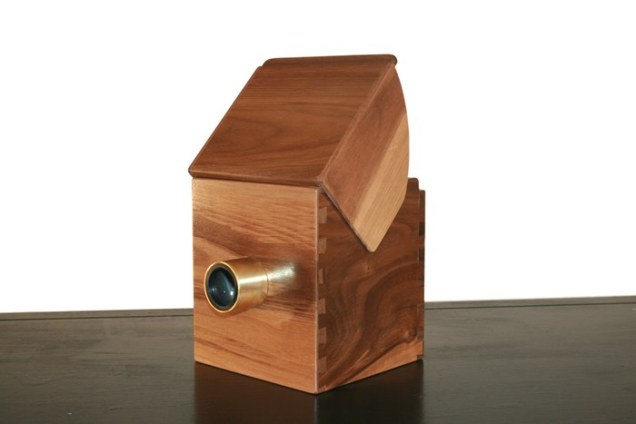
Folks, we’ve officially come full circle. The gigantic advancements in technology that have been made since Daguerre first fixed an image, Fox-Talbot invented the reproducible image and Kirsch invented the pixel still has photographers like us grasping for our roots. “The Camera Obscura is Back.”
Hey that’s a nice box!
And like anything in this post-post-modern world, it needs a tacky sales schpiel to sell it (we’ll get to that later.)
Before there were photographs, we painted to make a record of people, places and ideas. Many of these artists would use a camera obscura to aid them in this process as they provided a still frame from which to copy from, trace over or interpret more easily than their own sight. Damn peripheral vision!
David Hockney pointed out that many masterpieces had to have been created using this ‘old camera technology’ much to the horror of many art historians.
Then came along 1800s and something called ‘fixing the image’. Scientists, chemists and hobbyists (there were no photographers back then obviously) started experimenting with different materials that would take the light exposed onto the back of the camera obscura and fix it in place. Niépce was the first to successfully do this in 1827, although modern photography is often attributed to Daguerre and Fox-Talbot over a decade later.
Excited? Well get ready to have your visions of grandeur dashed by an awful ’90s style infomercial that not only teaches you how to suck eggs, but at the same time devalues the premise of the idea it’s created. Continue reading →




 Phogotraphy