Now this is an idea worth exploring. Artist & fashion illustrator Shamekh Bluwi has been cutting out holes in some of his work to allow the scene behind to ‘paint’ the sketches. He’s been sharing the creative idea through a series of photographs on his Instagram account.
We’ve seen similar work before, most notably FILMography the New York Movie Scenes blog by Christopher Maloney. However instead of lining up old movie scenes with the surrounding architecture, or indeed merging the past and present using old photographs, Shamekh envelopes the scene to evoke real world scenes on his sketches. Continue reading →
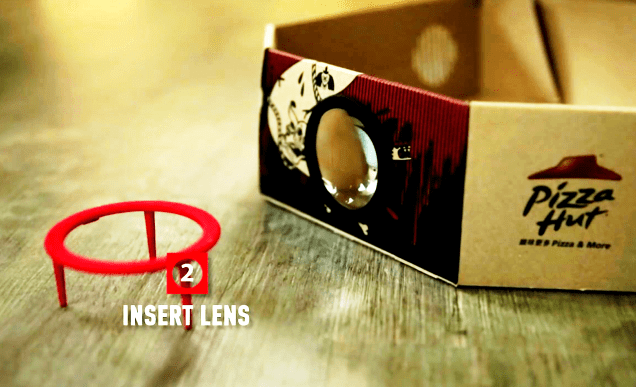
In what may be heralded as one of the most important photographic breakthroughs in recent memory, Pizza Hut has unveiled a pizza box that comes with a lens, thus turning it into a projector. Revolutionary!
The instructions say that you’ll require a smartphone and a darkened room. Then as with any cardboard projector the luminescent image of the screen will be projected and focussed through the lens that comes with the pizza. Ingenious. Perhaps they were inspired by Google’s cardboard Virtual reality system. Continue reading →
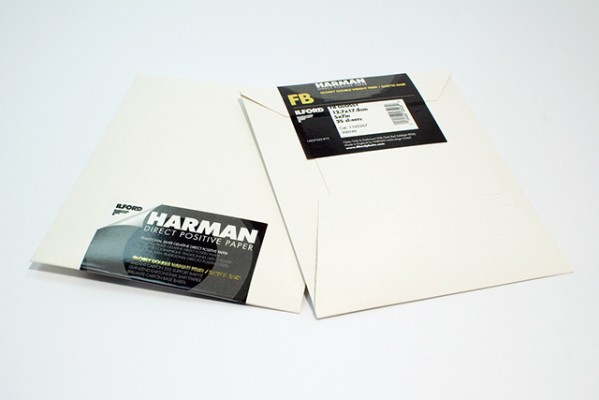
Oh it’s a very, very good day. After over a year of it being out of production for various reasons, Ilford’s Harman Direct Positive fibre based paper is to make a return. Pinhole photographers the world over will be punching the air in delight.
As described, direct positive paper has been popular among many analogue photographers because of the way it produces a positive image using normal black & white developing procedure. This makes it perfect for people experimenting with large format and of course the ever popular pinhole photography craze. Continue reading →
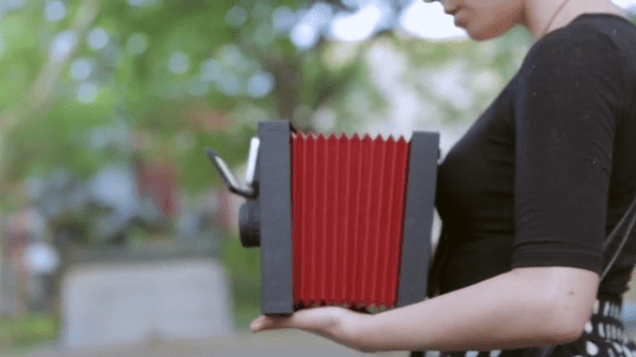
If you’re passionate about losing all self-respect as a photographer, look no further than the latest pretentiously sounding photographic KickStarter, Lumigraphe. It not only promises to extinguish any magic left in the exploration of photography’s early years but will also help remove any burden of disposable income from your wallet.
Can be found under the joke section on Kickstarter.
The video is deceptive enough to fool any unwitting photographer with more cash than braincells into thinking the product is actually a cool, unique and innovative idea. Presumably that is why 30 people have already spent a total of €4000 backing the toy company so far.
Here’s the promo video:
“Perhaps the most impressive thing about Lumigraphe is its simplicity”
Don’t let the sexy Thierry Henry accent fool you. Unless I’ve mistaken the whole thing for an ironic joke or study in social stupidity on the Internet I can tell you this statement is absurd. If you’re not laughing cringing already at the word simplicity, let me break it down for you. Continue reading →
Synaesthete James Wannerton experiences a sensation of taste in his mouth when he hears different words and sounds. Teaming up with photographic artist Sam Cornwell they have created a visually stunning set of photos as part of a synaesthesia style campaign for the UK’s 2015 general election.
James says the tastes he experiences are involuntary and in no way reflect political allegiances he may hold. The fact Nick Clegg gives him the disgusting sensation of a meatless bone of lamb is neither here no there. While ‘Labour party’ derives a taste of vinegary chips, ‘Conservatives’ taste of hard toffee and these sensations cannot be changed.
ABOVE: David Cameron / Conservatives tastes of hard toffee, macaroons, blue ink & the texture of cloth.
Representing the seven main political parties, the posters are linked by only the cursive line of a restaurant table draped in the party colours. James says he can elaborate extensively on the tastes he experiences with words. He explains The Liberal Democrats and Nick Clegg without holding back: Continue reading →
This year will mark forty years since the invention of the first functioning digital camera, and despite it being a measly 0.01 Mp it heralded a new age of digital photography and with it came a death cry for film.
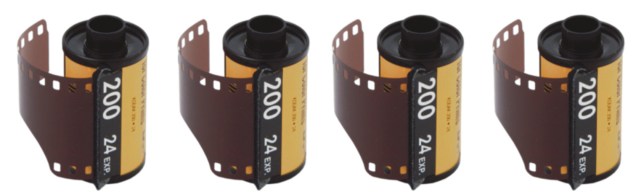
Yup, film is still very much in use by photographers. (Click for an Amazon Link)
Prompted by this incredibly dull article published recently by the BBC I decided to ask some fellow photographers what reasons they had for still shooting the so-called outdated technology. Here’s the list…
1. Film Photography was Already Perfect.
Those of us lucky enough to have photo albums from the ’90s and before tucked away in our parents’ homes will undoubtedly take great joy in flicking through the tattered card pages, looking through the embarrassing portraits, day trips to the zoo, the beach, birthday parties and that time our trousers fell down in the park. The point I’m making is these vernacular photo albums were perfect and they were all shot on film.
Even old Photo Albums Found at Junkyard Sales have that Perfect Photographer’s Touch
Fast forward to today and we’re not only making fewer albums, we’re taking more photographs to get that perfect shot. Even our smartphones are littered with countless portraits of our children, nieces and nephews, because the photo before could have been just a little bit better. Back in the day of film photography we didn’t worry about that and those photo albums that we look back on are still as perfect today as when our parents first stuck them down.
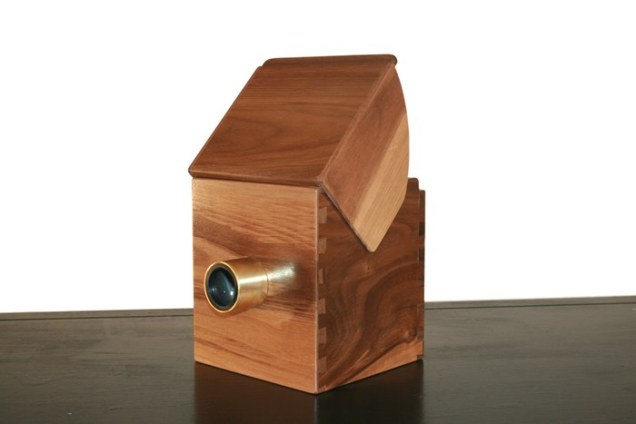
Folks, we’ve officially come full circle. The gigantic advancements in technology that have been made since Daguerre first fixed an image, Fox-Talbot invented the reproducible image and Kirsch invented the pixel still has photographers like us grasping for our roots. “The Camera Obscura is Back.”
Hey that’s a nice box!
And like anything in this post-post-modern world, it needs a tacky sales schpiel to sell it (we’ll get to that later.)
Before there were photographs, we painted to make a record of people, places and ideas. Many of these artists would use a camera obscura to aid them in this process as they provided a still frame from which to copy from, trace over or interpret more easily than their own sight. Damn peripheral vision!
David Hockney pointed out that many masterpieces had to have been created using this ‘old camera technology’ much to the horror of many art historians.
Then came along 1800s and something called ‘fixing the image’. Scientists, chemists and hobbyists (there were no photographers back then obviously) started experimenting with different materials that would take the light exposed onto the back of the camera obscura and fix it in place. Niépce was the first to successfully do this in 1827, although modern photography is often attributed to Daguerre and Fox-Talbot over a decade later.
Excited? Well get ready to have your visions of grandeur dashed by an awful ’90s style infomercial that not only teaches you how to suck eggs, but at the same time devalues the premise of the idea it’s created. Continue reading →
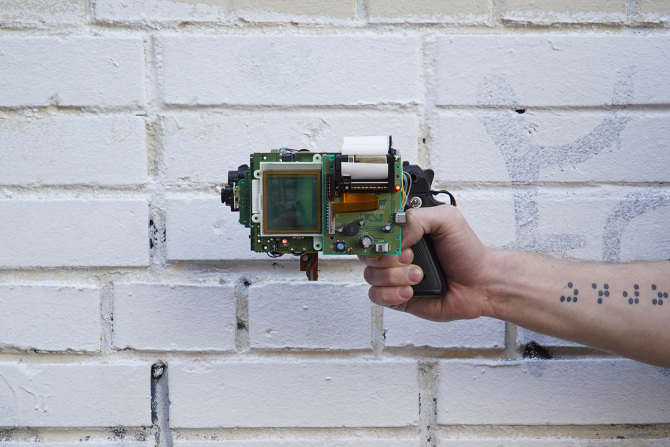
Moscow based artist Dmitry Morozov has designed a digital camera by reengineering a Gameboy classic, accompanying thermal printer accessory and a GUN!
Dmitry Morozov’s 8-bit Instant Photo Gun.
He calls it the 8-bit Instant Photo Gun, and that’s exactly what it is. Despite looking like a movie prop from a futuristic steampunk-esque film like Mad Max, the camera is actually quite functional. Albeit a certain taste may be required to appreciate this certain output aesthetic.
The thermal printers & camera were sold as an accessory to the Gameboy over a decade ago. With under 1 Mega-Pixel of power they are slowly starting to creep bag into the digital-hispter’s bag. Morozov has simply repurposed the entire system to work with a gun’s trigger. Continue reading →
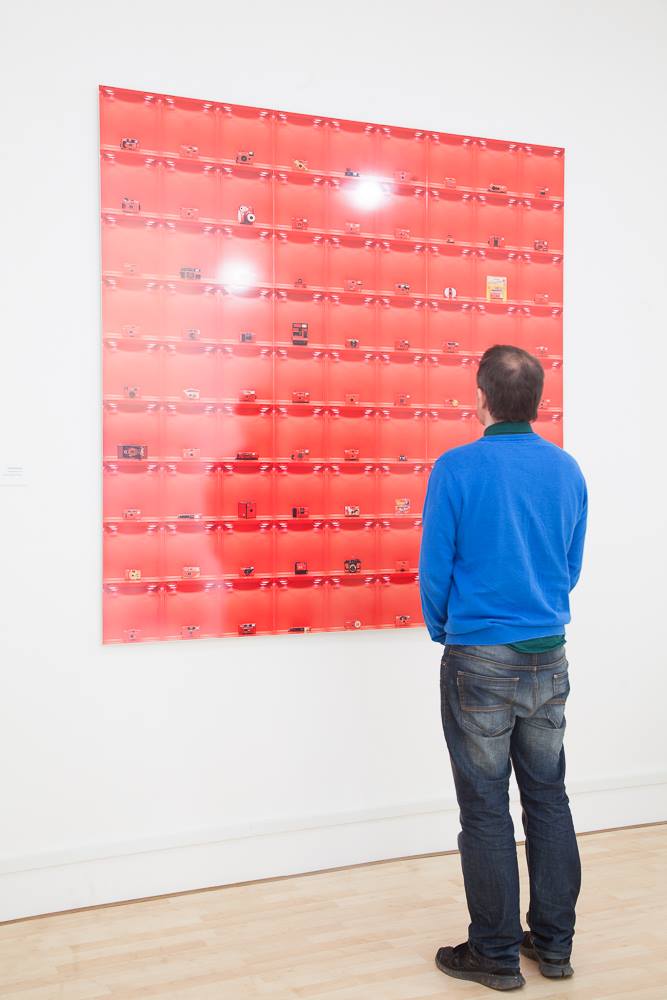
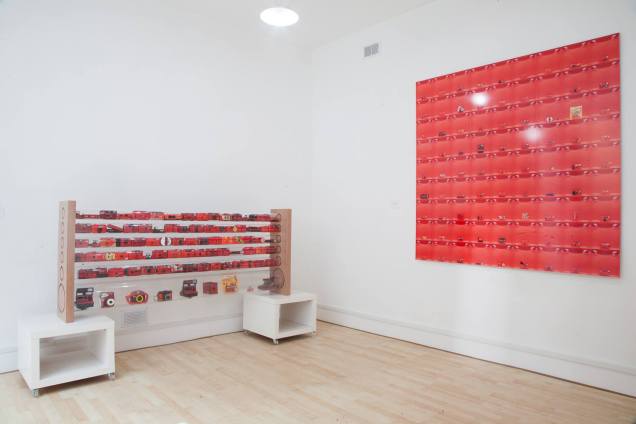
Last week during a cold February evening in the Borders of Scotland, the lights of a small photographic art gallery were turned on for the first time and a new exhibition was unveiled. The walls were devoid of landscapes, portraits and the traditional visual art you’d come to expect with photographers. Instead a large, garish print hung on the far wall, unmistakably red. A small sign to the left gave it the name ‘Tacky Red Cameras.’
Tacky Red Cameras, Photographic Print – Sam Cornwell 2015.
We’ve got used to seeing camera collections in many different shapes and forms, especially ones with high price tags on eBay. What makes this collection different from all those is the overwhelming abundance of the colour red. Upon further inspection, The Becher-esque style grid is filled with 81 (9×9) individually coloured red cameras.
Tacky Red Cameras Photographic Print, 70×70″, Dibond.
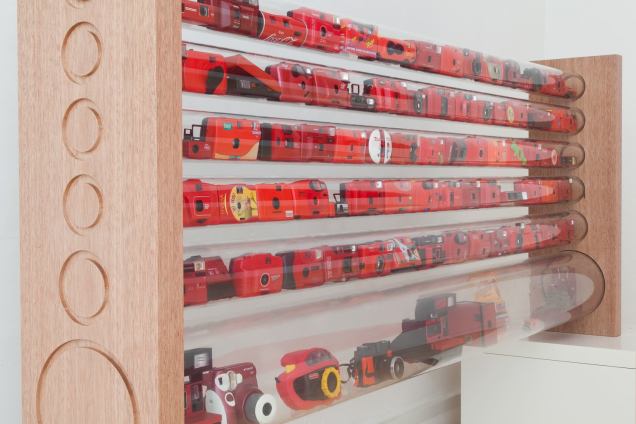
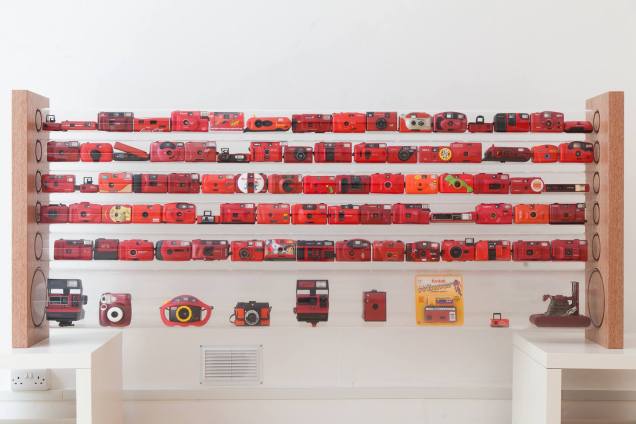
Tacky Red Cameras is a five year long study into mass production practises of the 20th century and how we have continued to consume in the present and beyond. A seemingly unobvious collection of red cameras all of which are still in their purchased, second hand state take place in three forms; a sculpture, a photographic print and a 3D printed object. The past, present and future.
The large print fills the white wall it is homed on and is big enough for the viewer to get up close and personal to inspect the different models on display. The actual cameras in sculpture form are presented beautifully encased in clear tubes close to the print.
Tacky Red Cameras, Sculpture – Sam Cornwell 2015.
The trifecta is completed with a much smaller exhibit, also unashamedly red. Artist Sam Cornwell collaborated with French artist Quentin Orhant to print a red camera. Yes, print. Continue reading →
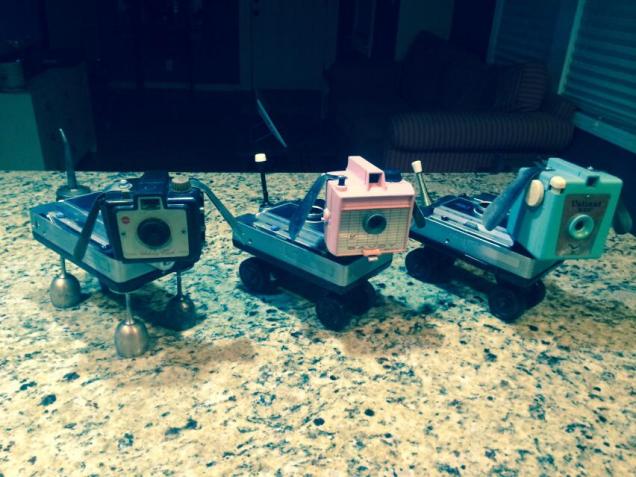
In a twist that may inspire millions to reach for their attic cupboards and pull out boxes of old camera gear, Michael Vivona shows that film photography isn’t dead just yet by bringing analogue cameras back to life.
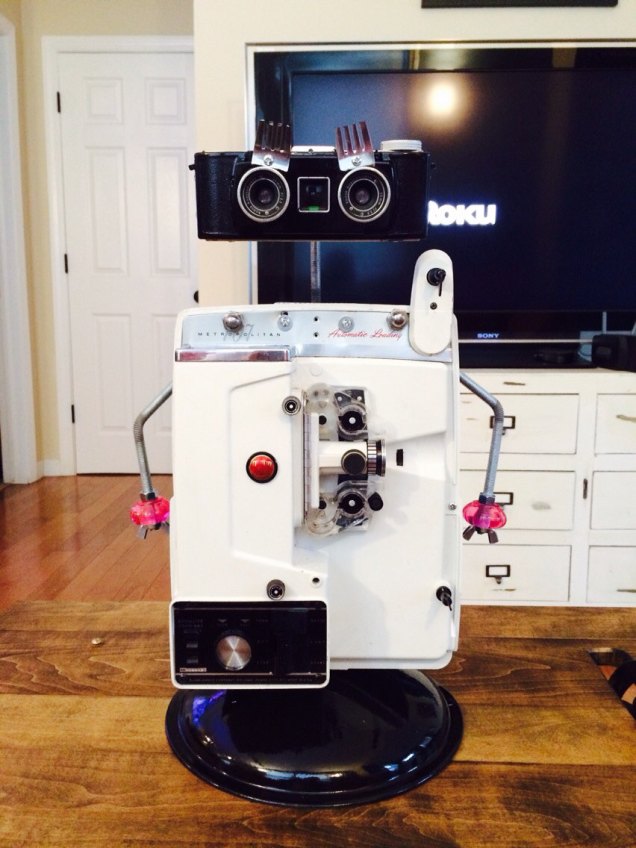
Michael Vivona Camera Statue or Johnny 5 is still alive?
Michael openly admits that he isn’t a photographer, which is evident from the Instagram filtered display photos he’s taken for his art. However, what he lacks in compositional detail for the camera frame, he more than makes up for in his artistic ability as a sculptor. And it’s not just your typical Hollywood shape that’s appearing in his collection, there’s a penchant for dogs as well.
Woof woof, whirrr, click.
Drawn to items built and designed in the ‘Atomic Age’ Michael poured through local thrift stores looking for items when he stumbled across his first ‘camerabot.’ With a projector as a body, security cameras as feet and an old twin lens reflex 120 film camera lending itself as eyes, his first Wall-E or Johnny-5 type character was born. Continue reading →





 Phogotraphy